

Every September, I relish the opportunity to go to the Toronto Ukranian Festival in the Jane & Bloor area of the west end. Primarily, I’m looking for varenyky and patychky – two Ukranian dishes that my grandmother used to serve in abundance. However, I also am often left satiated simply by taking in the joy of the crowds, performers, and vendors.

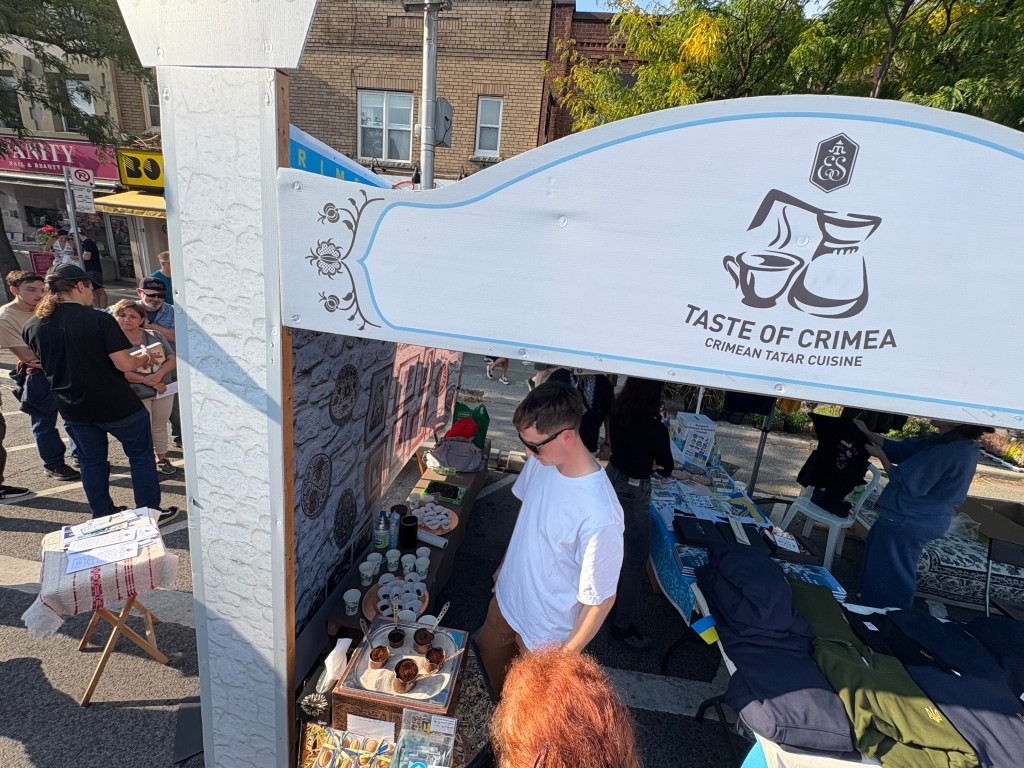
This year, one of the vendors was Taste of Crimea: Crimean Tatar Cuisine, run by the Canadian Association of Crimean Tatars. I was drawn to it by the people who were being poured cups of coffee from copper pots resting in a bed of sand.
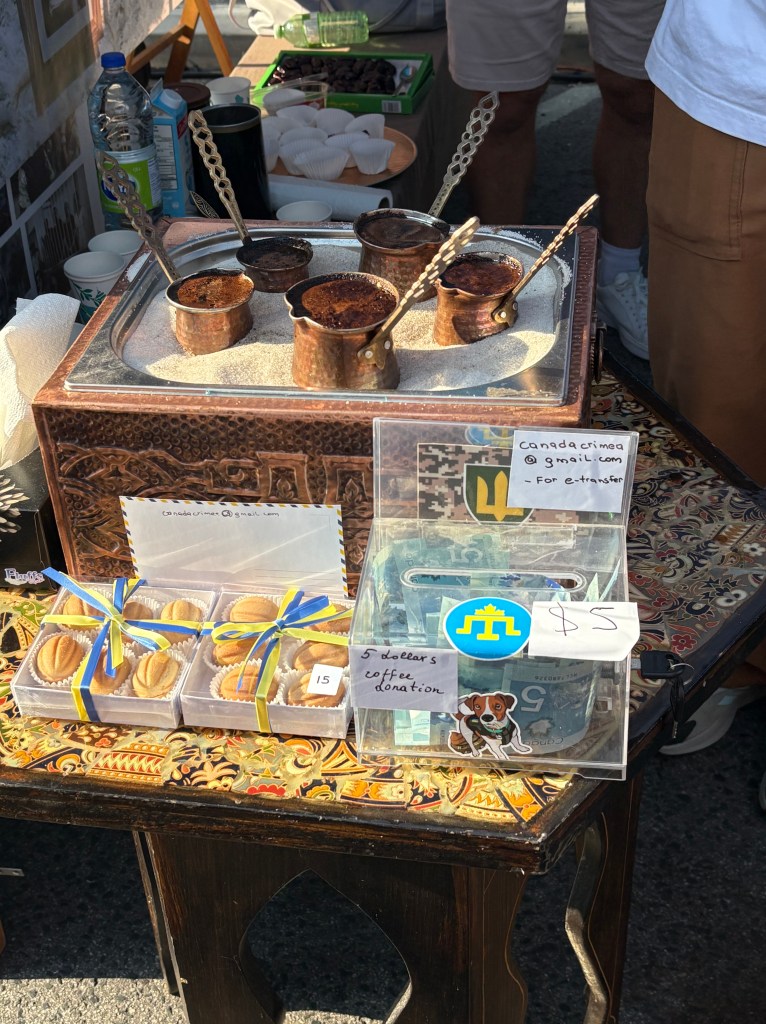
I’ve never had Turkish Coffee but this is what came to mind as I watched the gentleman in charge gently dip a spoon into a foamy crema on each pot – seemingly to determine it’s readiness. It was easy for me to drop $5 into their donation box to give it a try.
Brewing was slow and I was happy to wait and listen to the conversations around me as people asked, “what is that?” and “is that coffee?” Others tried to understand what may be happening with the spoon as I did. Patience was a virtue in this case as the result of my donation was a dark black, smoky brew that coated my mouth perfectly. Even with temperatures approaching 30 degrees and my poor choice of a black hat causing some sweat concerns, this hot smoky coffee hit the spot post- sauerkraut (vashena kapusta) varenyky binge.
What I’ve learned since is the deep history of this brewing method on each side of the North Sea – regional variations of which have differed only slightly from their Turkish origins. Traditionally, there were even gendered versions of Tatar coffee in Crimea using rock salt or a bit of mutton fat to distinguish men’s coffee from women’s.
The pots I saw are called cezves which are long-handled and partially buried in sand heated from below. In this case, I believe they were using a commercially available electric base. The sand provides a literal ‘bath’ of evenly distributed heat that, from my reading, ensures a slow build instead of aggressive boiling which is essential to producing the thick, black style of coffee with foamy crema (kaimaki) that I enjoyed. Figs were also being served with each cup – linking a longstanding tradition of Crimean Tatar hospitality and culture; usually with sweet cookes (dzheizli boynuzchyklar). This hospitality signified importance and status throughout the Ottoman Empire of the 17th-19th century and provided information exchange opportunities – as I gathered during this most recent stop.
In recognition of its deep cultural significance, the Crimean Tatar coffee tradition has been officially added to the National List of Elements of the Intangible Cultural Heritage of Ukraine.
Oh, and are you wondering about the spoon issue, as we were? Turns out, the coffee must be removed from the heat just before it boils over. Boiling the coffee destroys the foam and releases bitter, burnt flavors. In Crimean Tatar tradition, a grandmother or mother teaches that the coffee should be “scared” – meaning it must be removed from the heat immediately as the foam rises to the brim, but never allowed to aggressively boil.
–
While we’re chatting about good coffee, a conversation could be had about the current war in Ukraine, annexation of Crimea, and the likely rabid debates going on in coffee houses throughout the area. However, we’d like to focus on the Ukranian children that have gone and continue to be missing and/or trapped during this needless armed conflict. To learn more about how you can help, visit the following websites that are actively providing information, taking donations, or offering other ways to help…
- Canada-Ukraine Foundation
- Government of Canada (Call to Return Children)
- UNESCO
- Unicef Canada
- World Food Program
- Save the Children
- War Child
 The Analogue Press
Leave a comment